Yes, and most Massachusetts homeowners should. When you stack heat pump rebates in Massachusetts, one install draws on four separate sources of money, and each one cuts a different part of the cost.
A regional discount comes off the invoice. Your utility pays a rebate after startup. A 0% loan spreads out the balance, and a lower winter electric rate trims the bills that follow.
Each layer has its own rules and timing, so the order you work in decides how many you keep. Read on to see where each one lands and how we line them up for you.
What Stacking Heat Pump Rebates Means
Stacking means claiming every incentive your home qualifies for on the same project, not just the biggest one. Each comes from a different pot of money, so using one doesn’t shrink another.
That matters more now than it did a year ago. The federal tax credit for heat pumps expired when 2025 closed, so today’s savings come from Massachusetts programs, your utility and a New England grant. None of them make you wait for tax season.
What a Fully Stacked Install Gets You
- More of the project paid by programs. Four sources chip in on one install, so your share gets smaller with every layer you keep.
- Less cash out on install day. A discount at sale and 0% financing mean the balance doesn’t have to come out of savings all at once.
- A warmer, tighter house. The energy assessment that opens the loan often turns up insulation and air sealing, so the new system has less heat to make up.
- Smaller electric bills each winter. A heat pump rate lowers part of your electric charge through the heating season.
- One company on the paperwork. We handle the contractor side of every program, so you aren’t chasing forms across two or three offices.
Four Layers That Pay at Different Times
Each layer pays out at its own moment, which is why homeowners often miss one. On a typical project, they land in this order.
The Regional Discount Comes Off at Sale
The New England Heat Pump Accelerator is a five-state program backed by a $450 million federal grant, with about $100 million of it set aside for Massachusetts. It pays distributors to pass a discount down the line, so qualifying heat pumps cost less before they reach your home.
You don’t fill out a form for it, and it shows up as a lower price on your quote rather than a separate check. The grant period runs through 2029, and the discount sits on top of your utility rebate instead of replacing it.
The Utility Rebate Pays After Startup
For most homes, the utility rebate is the biggest layer, and it arrives once the system is running and the paperwork is accepted. Mass Save pays by the ton of heating capacity, and your tier sets the rate.
A whole-home system that becomes your only heat earns the top tier. A heat pump that runs alongside a boiler or furnace you keep earns the partial-home rate, which is lower but still worth claiming.
The 0% HEAT Loan Spreads the Balance
Whatever the discounts don’t cover, the Mass Save HEAT Loan can spread over up to seven years at 0% interest. You apply through a participating bank or credit union after your home energy assessment, and the loan is subject to the lender’s approval.
Pairing the loan with the rebate means less of the project comes out of your savings at once.
The Heat Pump Rate Lowers Winter Bills
The last layer shows up on your electric bill. Eversource, National Grid and Unitil now offer a seasonal heat pump rate that lowers part of the distribution charge between November 1 and April 30.
It isn’t automatic, so you’ll need to ask your electric company to enroll you once the heat pump is in. Ask before November 1 and the lower rate covers the whole heating season. On a municipal light plant, ask your town utility what it offers heat pump owners.
Your Utility Bill Sets Your Stack
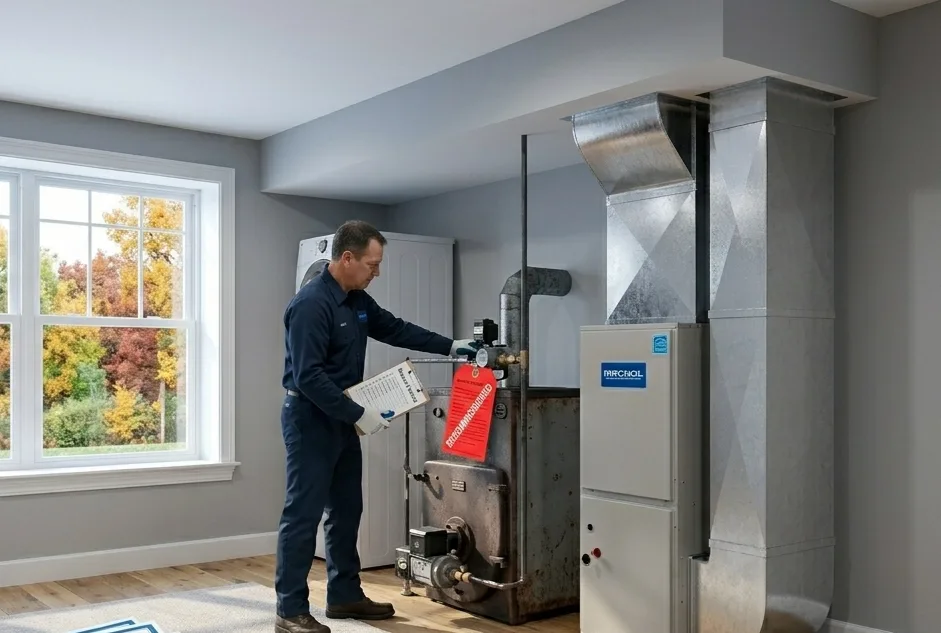
Where you live matters less than who sends your bills. Mass Save is sponsored by the state’s investor-owned gas and electric companies, so its rebates follow your account, not your town line.
Towns with a municipal light plant run their own electric programs, with their own amounts and forms. Even there, a home heated by natural gas from a Mass Save gas company can have that company sponsor the rebate.
Oil and propane have no utility behind them. When an oil or propane system comes out, your electric company becomes the sponsor if it’s part of Mass Save. That’s why the first thing we ask for is a recent gas or electric bill.
Five Steps That Keep Every Layer
Each step opens the next, so the sequence matters as much as the paperwork.
- Book the home energy assessment. It’s free for Mass Save customers, and it opens the door to the HEAT Loan. Dave puts it plainly. “It costs you nothing and it starts the ball rolling.”
- Confirm your sponsors from the bill. Your gas and electric accounts decide which rebate forms apply and whether the heat pump rate is open to you.
- Size the system and choose qualifying equipment. The system is sized to your home’s heating load, and the exact model has to be on the program’s qualified list. Every MRCOOL model we quote carries ENERGY STAR’s cold-climate certification, and Massachusetts rebates won’t pay without it.
- Install, start up and file. We document the finished install and submit the contractor paperwork. You sign wherever the program asks for the homeowner.
- Call your electric company about the rate. One request before November 1 puts the winter discount on your account.
Three Mistakes That Cost a Layer
- Choosing equipment before checking the list. A heat pump that isn’t on the qualified product list can lose the utility rebate even if it runs well. We check the exact model number before your quote is final.
- Leaving the old system connected on a whole-home claim. The top tier is for homes where the heat pump becomes the only heat. Your existing oil, propane or gas heat has to come out or be disconnected, so plan for the partial-home tier if you want a backup.
- Skipping the assessment. Without it, the HEAT Loan isn’t available, and you may miss insulation work that lets a smaller system do the job.
Homes That Get the Most From Stacking
Some homes collect more layers than others, and it usually comes down to the heating system they have now.
- Oil and propane homes going all-electric. These homes leave fuel deliveries behind and can qualify for the top rebate tier in the same move.
- Homes on one of the three big electric companies. Their customers can use all four layers, including the HEAT Loan and the winter rate.
- Older homes with window units and no ducts. Ductless mini-splits suit these houses, and even a partial-home system earns a rebate.
- Income-eligible households. Mass Save offers enhanced rebates based on household income, and some homes qualify for far more help than the standard tiers.
What to Look For on Each Quote
Dave tells every homeowner the same thing. “You need three estimates. Always get three. Then you’ll know what the job should cost.” The stack is the easiest place to compare them.
- Model numbers you can check. Every indoor and outdoor unit should be listed by model, so you can match it to the qualified list.
- The rebate tier named. A quote should say whether the job is planned as whole-home or partial-home, since that sets the rebate.
- A sizing method. Ask how the system was sized for your heating load, not just your square footage.
- Who files what. The quote should say who completes the program paperwork and what you’ll be asked to sign.
How We Build Your Stack
Dave does every estimate in person, and the stack is part of it. He reads your bills, checks which programs apply and shows you what they cover against what’s left for you to pay.
As the nation’s first MRCOOL franchisee, we keep MRCOOL equipment in stock, so the model on your quote doesn’t wait on a shipment. A two-zone install is mostly done in one day, and a five-zone system takes about three.
On install day, we mount outdoor units at the rear or on a side wall, out of view from the street, and lay drop cloths before the work starts. The paperwork earns the rebates, and the care on install day is what you live with afterward.
Once the system is running, we take care of the contractor paperwork for the utility and regional programs, and we stay on the file until the rebate is paid.
Ready to See What Your Stack Covers?
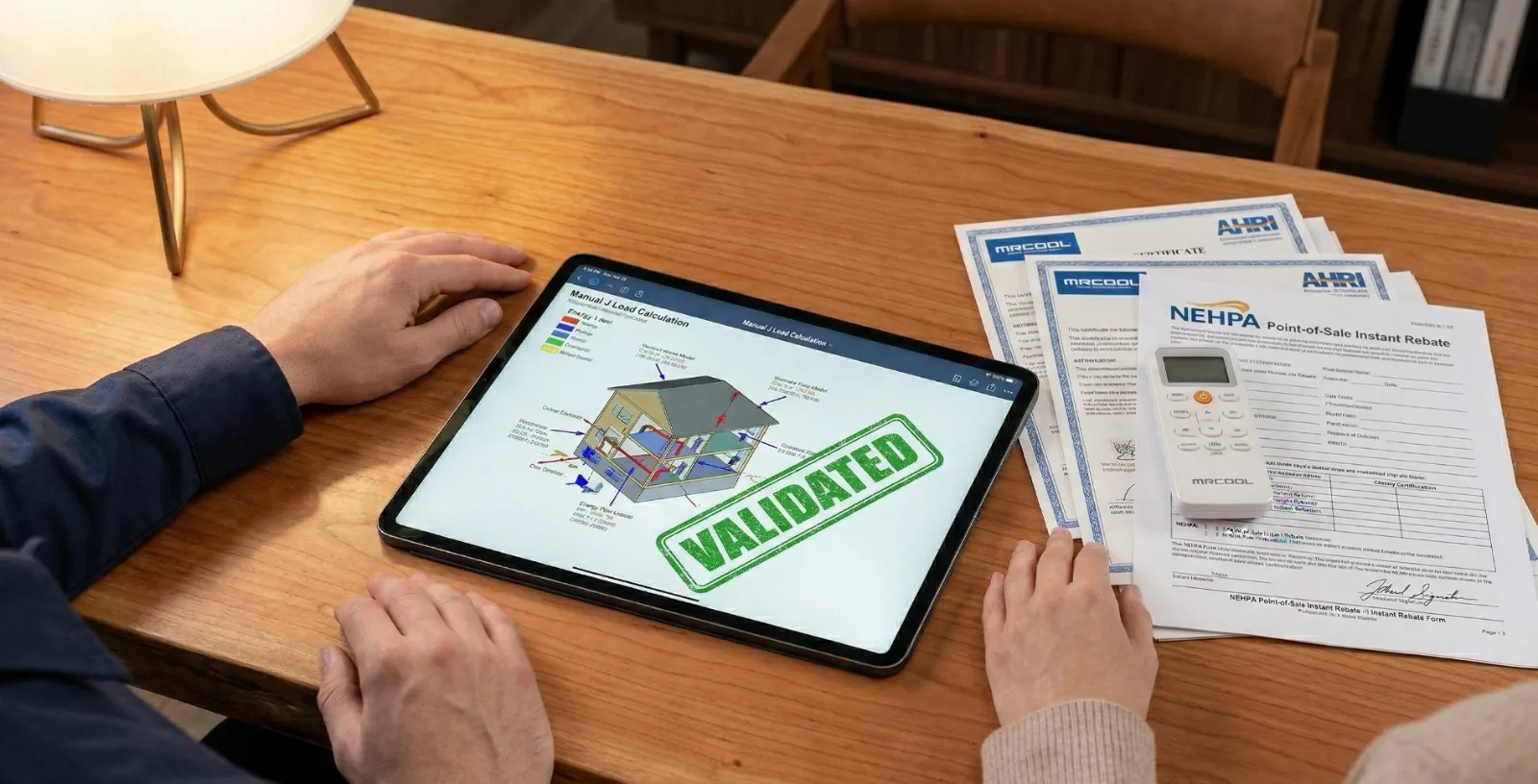
Stacking heat pump rebates in Massachusetts comes down to four layers and the right order. The discount comes off at sale, the rebate follows startup, the HEAT Loan spreads the rest and the winter rate trims your bills.
Program amounts change through the year, so we confirm the current figures for your address when we quote. Call Dave at (774) 433-1398 or book your free home energy assessment, and we’ll show you what the programs cover on your project.