
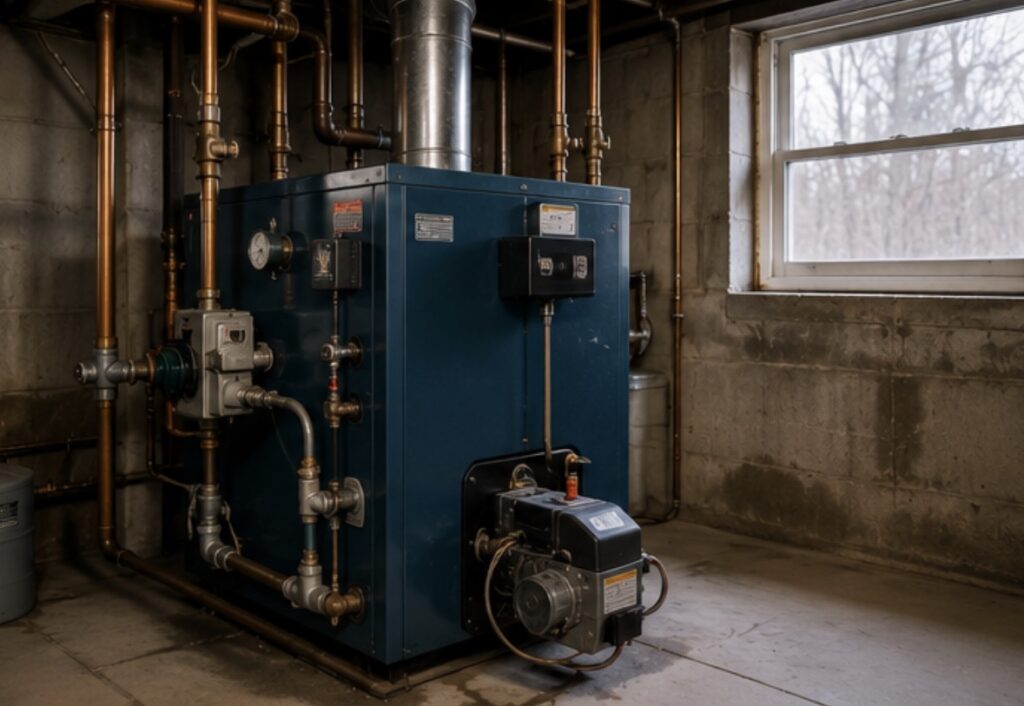
If your oil boiler is still heating your Taunton-area home reliably, replacing it can feel unnecessary. A working boiler may have several years of useful life left, yet Massachusetts’ current heat pump incentives can make this a much more important decision than it would have been a few years ago.
For 2026, Mass Save offers whole-home air-source heat pump rebates of $2,650 per ton, up to $8,500, when qualifying equipment replaces an eligible existing heating system and becomes the home’s primary heating and cooling source. Partial-home installations can qualify for $1,125 per ton, up to $8,500, while income-qualified households may have access to enhanced incentives of up to $16,000.
That does not mean every homeowner with a functioning oil boiler should replace it immediately. The smarter question is whether your boiler, home, electrical service, comfort needs, and available incentives make 2026 a financially and technically sensible time to transition to a heat pump.
A Working Oil Boiler Does Not Automatically Mean You Should Keep It

A boiler that starts reliably and heats every room evenly deserves to be evaluated based on its condition, not replaced simply because heat pump rebates are available. If the boiler has been maintained, has no significant corrosion or safety concerns, and is not facing expensive repairs, keeping it temporarily may still make sense.
The decision changes when the boiler is aging, becoming expensive to maintain, or paired with other problems in the home. An oil-heated house may also have no central cooling, meaning a heat pump could address both heating and air conditioning with one system.
Before making the decision, look at the boiler as part of the entire home rather than as an isolated piece of equipment.
Look at These Five Factors
- Boiler condition: Determine its age, maintenance history, efficiency, and whether major components are showing wear.
- Oil consumption: Review your recent heating-oil usage rather than relying on an estimated annual bill.
- Cooling needs: If you currently rely on window AC units or don’t have whole-home cooling, consider the value of gaining central heating and cooling from one system.
- Home efficiency: Insulation and air sealing can significantly affect the heating load a heat pump must handle.
- Rebate eligibility: Confirm which Mass Save incentive applies before making equipment or fuel-conversion decisions.
For example, replacing a relatively new, well-maintained boiler solely to collect an $8,500 incentive may not produce the best financial outcome. But if you’re already facing a major boiler repair and also want to eliminate oil deliveries and add whole-home cooling, the economics can look very different.
Understand What the 2026 Mass Save Heat Pump Rebates Actually Cover
The current Massachusetts incentive structure makes the distinction between whole-home and partial-home heat pump installations especially important. A whole-home installation uses qualifying heat pumps as the home’s sole heating and cooling source. For 2026, Mass Save lists a rebate of $2,650 per ton, capped at $8,500 for qualifying air-source systems. A partial-home system, where an existing boiler remains to supplement the heat pump, is eligible for $1,125 per ton, up to $8,500.
| 2026 Mass Save Option | Air-Source Heat Pump Rebate | General Approach |
|---|---|---|
| Whole-home | $2,650/ton, up to $8,500 | Heat pump provides the home’s heating and cooling |
| Partial-home | $1,125/ton, up to $8,500 | Existing boiler remains as supplemental heat |
| Basic | $250/ton, up to $2,500 | Applies to certain installations that don’t displace eligible primary heating |
| Income-qualified | Up to $16,000 | Enhanced incentives may be available based on household income |
The whole-home option is particularly relevant if you’re considering retiring your oil boiler completely. Mass Save requires qualifying equipment, installation by a contractor participating in its Heat Pump Installer Network, and additional eligibility requirements. Whole-home projects also require the home to meet applicable weatherization requirements and completion of the Whole-Home Heat Pump Verification Form.
There is also a timing consideration. For qualifying 2026 installations, Mass Save states that the equipment must be installed between January 1 and December 31, 2026, with rebate documentation submitted by February 28, 2027.
That makes it important to verify eligibility before signing a replacement contract, rather than assuming the rebate will automatically apply after installation.
Compare the Boiler’s Remaining Life With the Cost of a Heat Pump
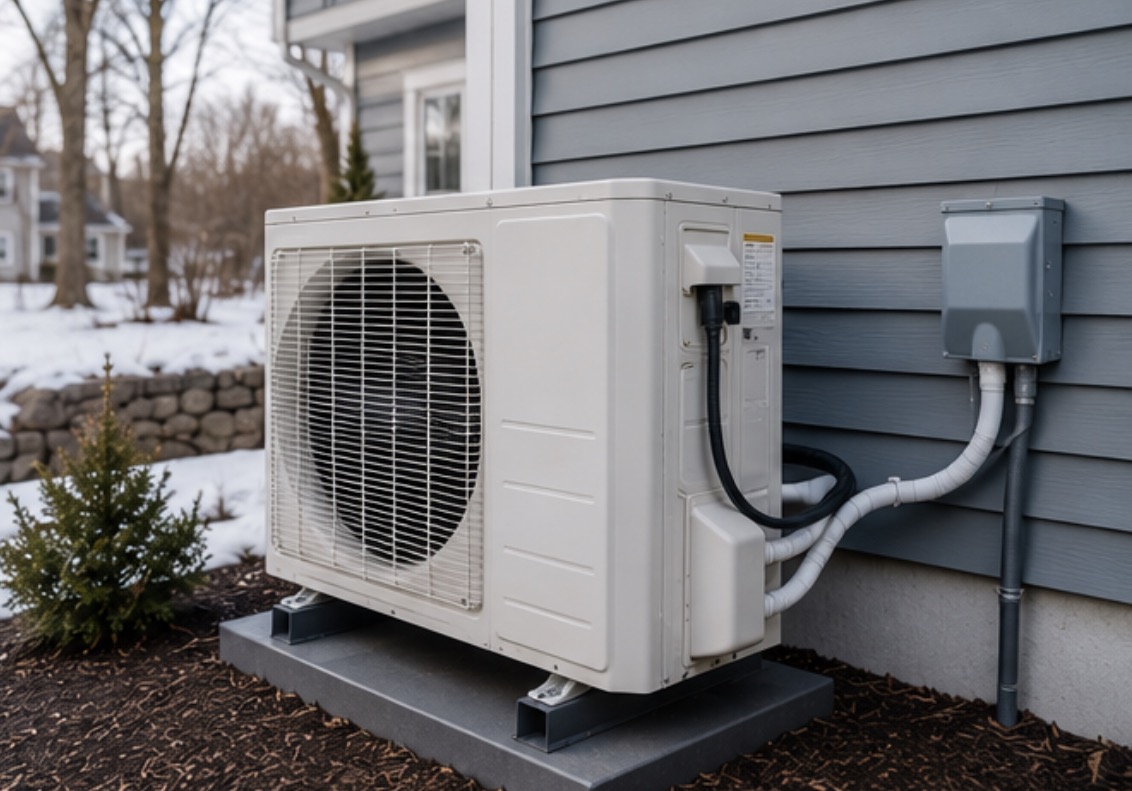
The most useful calculation is not simply “How much is the rebate?” It is “What will I spend to keep this boiler versus what will it cost to transition the home to heat pumps after available incentives?”
Start by gathering your oil bills from the last 12 months, recent boiler repair invoices, maintenance records, and your current cooling costs. If you’re using several window AC units during the summer, include those electricity costs and the practical limitations of cooling individual rooms.
A professional heat pump evaluation should then look at the home’s heating load, insulation, ductwork if applicable, electrical capacity, and the boiler’s condition. This is particularly important in older Taunton-area homes where insulation levels, additions, replacement windows, and existing heating distribution may differ substantially from the home’s original design.
A Replacement Comparison Should Include
- Current boiler condition: What repairs are likely in the next few years?
- Oil usage: How many gallons did the home consume during recent heating seasons?
- Heat pump capacity: Can the proposed system meet the home’s heating requirements?
- Backup strategy: Is the boiler being removed, retained, or replaced with another backup?
- Cooling benefit: Will the heat pump eliminate or reduce the need for window AC units?
- Electrical requirements: Can the home’s electrical system support the proposed equipment?
- Weatherization: Does the home need insulation or air-sealing improvements first?
- Available incentives: Which Mass Save rebate and financing options actually apply?
This evaluation can reveal that a heat pump makes sense even though the boiler still works, or that keeping the boiler for now is the more practical choice.
The key is to make the decision from actual numbers and the condition of your home, not from the rebate amount alone.
Check Whether Your Home Is Ready for a Heat Pump
A working oil boiler does not tell you whether your home is ready for a heat pump. The contractor needs to evaluate how much heat the house actually requires, how heat currently reaches each room, and whether the electrical system can support the proposed equipment. In an older Taunton-area home, insulation, air leakage, additions, replacement windows, and previous renovations can all change the heating load compared with when the house was originally built.
Before choosing equipment, have these conditions evaluated:
- Heating load: Determine how much capacity the home actually needs rather than matching the heat pump to the boiler’s size.
- Electrical service: Confirm that the home’s electrical capacity can support the proposed heat pump and any required electrical upgrades.
- Heat distribution: Determine whether ductwork exists and is suitable, or whether a ductless configuration would be more practical.
- Weatherization: Identify insulation and air-sealing improvements that could reduce the home’s heating demand before installation.
- Existing boiler: Evaluate whether the boiler will be removed completely or remain available as supplemental heat.
This evaluation is particularly important when replacing oil heat because a boiler and heat pump do not necessarily deliver heat in the same way. The objective is to design the new system around the home’s actual requirements rather than simply replacing one heating appliance with another.
Compare Whole-Home and Partial-Home Heat Pump Options

Your decision becomes clearer once you determine whether you want the heat pump to replace the oil boiler completely or work alongside it. Mass Save treats these as different rebate paths. In 2026, qualifying whole-home air-source heat pumps receive $2,650 per ton, up to $8,500, while partial-home installations receive $1,125 per ton, up to $8,500.
| Option | How It Works | 2026 Air-Source Rebate |
|---|---|---|
| Whole-home | Heat pump becomes the home’s primary heating and cooling system | $2,650/ton, up to $8,500 |
| Partial-home | Heat pump supplements the existing oil boiler | $1,125/ton, up to $8,500 |
If your boiler is still dependable and you want to transition gradually, keeping it as supplemental heat may be worth evaluating. If the boiler is nearing the end of its practical life and the home is suitable for full electrification, a whole-home heat pump conversion can provide both heating and cooling while qualifying for the larger rebate path.
Calculate the Real Cost Before Replacing the Boiler
Don’t base the decision on the rebate alone. Compare the net heat pump investment with the expected cost of keeping the boiler, including oil, annual maintenance, repairs, and the cost of adding or replacing window AC units if you currently use them.
For example, an eligible 3-ton air-source heat pump would have a calculated whole-home rebate of $7,950 before the program’s $8,500 cap. A 4-ton system would calculate to $10,600, but the rebate would be capped at $8,500.
There are also eligibility details that can materially change the calculation. Qualifying 2026 equipment must meet Mass Save requirements, be installed by a contractor participating in the Heat Pump Installer Network, and be installed between January 1 and December 31, 2026. Rebate documentation is due by February 28, 2027.
For a Taunton homeowner considering the switch, our heat pump installation service can be part of that evaluation. Peach Heat and Cool also provides guidance on available Massachusetts heat pump rebates so the equipment choice and incentive requirements can be considered together.
Why Peach Heat and Cool for an Oil-to-Heat-Pump Conversion?
Replacing a working oil boiler requires more thought than simply choosing a heat pump and applying for a rebate. At Peach Heat and Cool, we evaluate the home’s heating requirements, existing system, layout, insulation, distribution options, and whether a whole-home or partial-home conversion makes the most sense before recommending a path forward.
Our MRCOOL® expertise adds another important consideration for homeowners exploring the transition from oil heat. We can help determine whether a properly configured MRCOOL® heat pump system is suitable for your Taunton-area home, including whether a ducted, ductless, or supplemental setup fits the property’s existing conditions.
For Taunton and Southeastern Massachusetts homeowners, an aging boiler, rising oil costs, or the lack of whole-home cooling can make a heat pump worth evaluating. If the system is a good fit, our heat pump installation service can handle the project from equipment selection through installation, while our Massachusetts heat pump rebates guidance can help you evaluate the total investment and available incentives.