

For many Massachusetts homeowners, a whole-home heat pump looks unaffordable right up until the incentives are counted properly. Stacked together, the current Mass Save programs can move a project from something to consider eventually into something that makes sense this autumn.
Whether that applies to your home depends on which rebate tier you qualify for, what you are replacing, and how much of the sequence can be completed before the heating season arrives. Each of those is worth working through before you commit.
What Does the Mass Save Whole-Home Rebate Actually Cover?

Mass Save runs several heat pump rebate tiers rather than a single figure, and whole-home is the most generous of them. It currently pays $2,650 per ton of installed capacity, up to a maximum of $8,500 for the project.
That tier exists to support full conversions rather than additions. It is aimed at homes replacing a fossil fuel heating system with heat pumps that carry the entire heating load, which is why it pays considerably more than the partial and basic tiers below it.
The rebate is administered by the program rather than by your installer, and eligibility is confirmed before work begins rather than afterward. That sequencing detail causes more lost rebates than any other rule in the program.
Which Homes Qualify for the Whole-Home Tier Rather Than Partial?
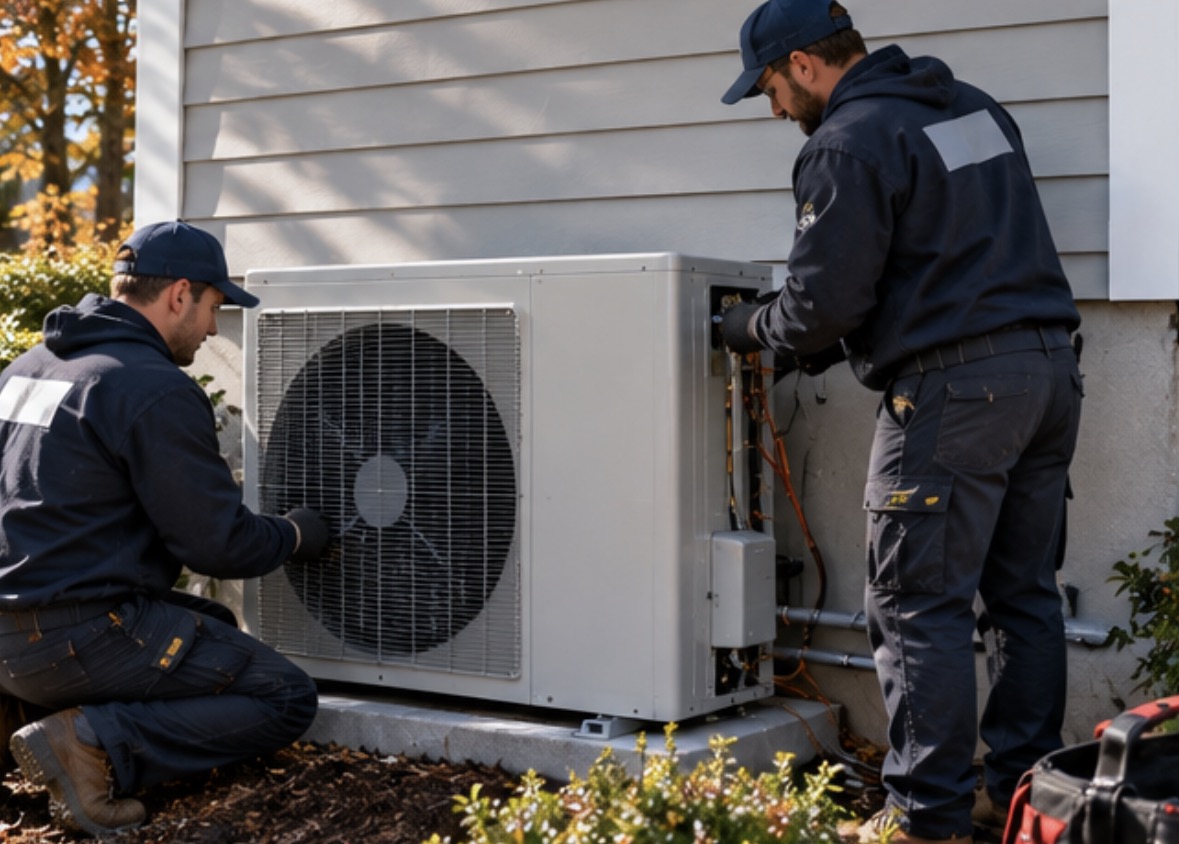
The difference between tiers comes down to what happens to your existing heating system and how much of the house the heat pumps are expected to carry. Homes that keep a fossil fuel system generally fall into a lower tier.
The situations below indicate which tier a project is likely to sit in. A program assessment is what formally decides it, but this can help you anticipate the figure before anyone visits.
| Situation | Which Tier It Usually Points To |
|---|---|
| Heat pumps carry the whole house, fossil fuel system removed | Whole-home, currently $2,650 per ton up to $8,500. |
| Heat pumps installed but the existing boiler or furnace stays | Partial-home, currently $1,125 per ton up to $8,500. |
| A single zone or one room added for comfort | Basic, currently $250 per ton up to $2,500. |
| Existing electric resistance heat being replaced | Varies. Worth confirming, since there is no fossil system to remove. |
| Household income at or below program thresholds | Enhanced incentives, which reach substantially higher amounts. |
| Home served by a municipal light plant | Not eligible for Mass Save. A separate municipal program applies. |
Two of those rows catch people out. Keeping the old boiler as a backup is a reasonable decision, but it moves the project into the partial tier, and homes in municipal light plant towns are outside Mass Save entirely regardless of what they install.
What Makes the Whole-Home Tier Worth More Than Partial or Basic?
The gap between the tiers is larger than most homeowners expect when they first compare them, and it is not simply a matter of the headline rate per ton. Four separate factors compound to widen that difference across a typical whole-house conversion project.
Pays a Higher Rate per Ton of Capacity
The whole-home rate is currently more than double the partial rate for the same installed capacity. On a project large enough to heat an entire house, that difference reaches the cap quickly.
Requires Displacing the Fossil Fuel System
Removing the existing heating system is what qualifies the project for the top tier. It also removes a standing fuel account, which changes running costs in a way the rebate figure alone does not capture.
Unlocks Sizing and Weatherization Bonuses
The program currently offers additional bonus credits for correct sizing and for completing recommended weatherization. Both are modest individually but they apply on top of the main rebate.
Pairs With the Zero-Interest HEAT Loan
The Mass Save HEAT Loan currently offers 0% APR up to $25,000 over seven years. Applied after the rebate, it spreads what remains rather than adding to the total cost.
Together those four change the shape of the decision. A project that looked out of reach at full price can land within a manageable monthly figure once the rebate is deducted and the balance is financed at zero interest.
What Should You Budget Once the Incentives Are Applied?
No two homes produce the same final number, because installed capacity, layout, insulation and existing ductwork all move the total in different directions. What can be set out clearly is which incentives contribute to a conversion and roughly what each one is currently worth.
The items below are the ones most commonly available to a whole-home conversion in our service area. Not every home qualifies for every line, and the amounts are reviewed by program year.
| Incentive | What It Currently Contributes |
|---|---|
| Whole-home rebate | $2,650 per ton of capacity, capped at $8,500. |
| Sizing and weatherization bonuses | Additional credits on top of the main rebate when conditions are met. |
| NEHPA pass-through | $650 off each qualifying outdoor unit. |
| Massachusetts sales tax exemption | The 6.25% state sales tax, roughly $937 to $1,250 on a typical project. |
| Income-qualified enhancements | Substantially higher amounts, reaching a no-cost system at the lowest thresholds. |
| HEAT Loan | 0% APR on up to $25,000 over seven years, applied to the remaining balance. |
The practical effect is that the cash figure and the financed figure are two different conversations. Our rebate calculator gives a rough estimate of the first, and our rebates page sets out the current programs in full.
Worth noting is that these incentives stack rather than compete. The rebate reduces the project cost, the pass-through and tax exemption reduce it again, and the loan then spreads whatever remains, which is a very different position from applying any one of them alone.
What Happens Between Now and a Working System?
The path from first enquiry to a running system follows a fixed order, and the rebate depends entirely on that order being respected. Skipping ahead to installation is the single most reliable way to lose the funding you had been counting on all along.
Booking the Free Home Energy Assessment
The program assessment is free and is a prerequisite rather than a formality. It establishes the baseline the rebate tier is judged against and often identifies weatherization that carries its own credit.
Securing Pre-Approval Before Anything Is Ordered
Approval has to be in place before installation begins. Equipment ordered or fitted ahead of that point can be disqualified, and the program does not generally pay retroactively.
Specifying Equipment That Meets Current Program Rules
Qualifying systems must be cold-climate rated and listed by the program, and current rules also specify refrigerants such as R-32 or R-454B. Equipment chosen without reference to that list can fail at the approval stage.
Completing the Paperwork That Releases the Rebate
Final documentation goes in after commissioning, and the rebate follows from that submission. Incomplete paperwork is a delay rather than a refusal, but it is an avoidable one.
Each of those steps has a lead time attached, and they run in sequence rather than in parallel. That is why the answer to the timing question depends heavily on when you start rather than on how quickly any single step can be done.
Is It Realistic to Finish Before Winter?
For a project started now, often yes, though the honest answer depends on assessment scheduling, equipment availability and how much weatherization the assessment ends up recommending. A straightforward conversion moves considerably faster through the process than one that uncovers significant insulation work first.
The constraint is rarely the installation itself. Assessment availability and the approval step tend to set the pace, and both get noticeably busier through autumn as other households reach the same conclusion about the coming heating season at roughly the same time.
What is worth avoiding is beginning the process in the middle of a cold snap, when a failed boiler forces a decision before approval can realistically be obtained. At that point the choice is usually between waiting without heat and paying for an emergency replacement outside the program.
Starting while your existing system is still working keeps the rebate route open and the decision genuinely yours. It also leaves room to price both the whole-home and partial routes properly rather than committing to whichever one can be arranged fastest.
FAQs
Do I Have to Remove My Existing Boiler or Furnace?
For the whole-home tier, yes. Displacing the fossil fuel heating system is what distinguishes that tier from partial-home, which allows the existing system to remain in place.
Can I Keep My Old System as a Backup?
You can, but the project then falls into the partial-home tier at a lower rate per ton. It is worth pricing both routes before deciding, since the rebate difference can be substantial.
What If My Town Has a Municipal Light Plant?
Mass Save does not apply, because the program is funded through investor-owned utility bills. Your municipal utility very likely runs its own rebate and loan program instead.
Does the HEAT Loan Cover the Whole Project?
It currently covers up to $25,000 at 0% APR over seven years, applied to the balance remaining after rebates. Larger projects may need additional financing beyond that ceiling.
How Long Are These Amounts Guaranteed For?
They are not. Program amounts, bonuses and deadlines are reviewed by program year and have changed more than once recently, so current figures should always be confirmed before committing.
Why Choose Peach Heat and Cool for a Whole-Home Conversion?
Whole-home conversions live or die on sequence and paperwork as much as on the installation, which is why our rebate concierge service handles the assessment, pre-approval and submission steps rather than leaving them with you. Getting the order right is what protects the funding.
Peach Heat and Cool holds a 5-star rating across 37 reviews, installs ENERGY STAR cold climate certified equipment, and is the flagship MRCOOL franchisee nationally. We cover whole-home heat pump installation and ductless mini split systems across Bristol, Plymouth and Norfolk counties.
Every figure in this article is set by the program rather than by us, and all of them are reviewed periodically, so confirm current amounts before you commit to anything. If you want the sequence mapped out for your own home while there is still time before winter, get in touch or call (774) 433-1398.