Skip to content


When a summer heatwave hits Massachusetts, your cooling system has to work much harder to keep your home comfortable. If you’re relying on a heat pump, you may wonder whether it can maintain comfortable indoor temperatures during days when outdoor temperatures climb into the 90s. It’s a common question among homeowners across Taunton, Bristol County, and Southeastern Massachusetts, especially as heatwaves become more frequent.
The answer depends on more than just the heat pump itself. System sizing, installation quality, airflow, insulation, and routine maintenance all influence how well a heat pump performs during extreme summer weather. In this guide, we’ll explain what affects cooling performance, how to tell if your heat pump is struggling, and what you can do to keep your home comfortable throughout the hottest days of the year.
Can a Heat Pump Really Cool Your Home During a Heatwave?

Yes. A heat pump cools your home using the same refrigeration process as a traditional central air conditioner. Instead of generating cold air, it removes heat from inside your home and transfers it outdoors. As long as the system is correctly sized and operating properly, it can provide consistent cooling throughout the summer.
Modern inverter-driven heat pumps are especially effective during heatwaves because they automatically adjust compressor speed instead of constantly turning on and off. This allows the system to match your home’s cooling demand more precisely while maintaining steady indoor temperatures and improving humidity control.
Many newer heat pumps continue delivering reliable cooling even when outdoor temperatures exceed 95°F. If your home struggles to stay comfortable during hot weather, the issue is often related to insulation, ductwork, or system sizing rather than the heat pump itself.
What Affects a Heat Pump’s Cooling Performance?
Several factors determine how well a heat pump performs during a Massachusetts summer. Even the most advanced equipment can’t operate efficiently if airflow is restricted or the home is gaining excessive heat. During installation, experienced contractors evaluate these conditions before recommending a system.
| Factor | Why It Matters During a Heatwave |
|---|---|
| Proper system sizing | Prevents the unit from being overworked during extended periods of high demand. |
| Home insulation | Reduces heat entering through the attic, walls, and ceilings. |
| Air sealing | Helps keep conditioned air inside while reducing outdoor heat infiltration. |
| Ductwork condition | Proper airflow allows cooled air to reach every room efficiently. |
| Outdoor unit airflow | The condenser needs unrestricted airflow to reject heat effectively. |
Homes with poor insulation or leaking ductwork may experience longer cooling cycles regardless of the HVAC system installed. Addressing these issues often improves comfort while reducing energy consumption.
What Are the Signs Your Heat Pump Is Struggling During Hot Weather?

A properly functioning heat pump should maintain a comfortable indoor temperature throughout most summer days. If your system begins falling behind during every heatwave, it’s worth investigating the cause before assuming replacement is necessary.
- Long Cooling Cycles: The system runs continuously for extended periods without reaching the thermostat setting.
- Warm Rooms Upstairs: Second-floor bedrooms or bonus rooms stay noticeably warmer than the rest of the house.
- Weak Airflow From Vents: Reduced airflow may indicate a dirty filter, blower issue, or duct restriction.
- Higher Energy Bills: Longer operating times often result in increased electricity usage during the summer.
- Indoor Humidity Feels High: Your home feels cool but still damp or uncomfortable, indicating reduced moisture removal.
Many of these symptoms can be corrected through professional heat pump maintenance or airflow improvements. An HVAC inspection can determine whether the issue involves the equipment itself or another part of your home’s cooling system.
How Can You Help Your Heat Pump Perform Better During a Heatwave?
Even a high-efficiency heat pump benefits from a little preparation before the hottest days of summer arrive. Small maintenance tasks and good airflow can make a noticeable difference when temperatures remain high for several days. These steps also reduce unnecessary strain on the compressor and help the system cool more efficiently.
Replace the Air Filter Before Peak Summer
A dirty air filter restricts airflow across the indoor coil, making it harder for the heat pump to remove heat from your home. Check the filter every month and replace it every 1 to 3 months, depending on the filter type and household conditions.
Keep the Outdoor Unit Free of Debris
Leaves, grass clippings, and shrubs can restrict airflow around the outdoor unit. Maintain at least 24 inches of clearance on all sides so the condenser can reject heat efficiently during the hottest part of the day.
Reduce Indoor Heat Gain
Closing blinds during the afternoon, using ceiling fans, and limiting the use of ovens or dryers during peak heat can reduce the cooling load on your heat pump. Less heat entering the home means the system doesn’t have to work as hard to maintain a comfortable temperature.
Schedule Preventive Maintenance
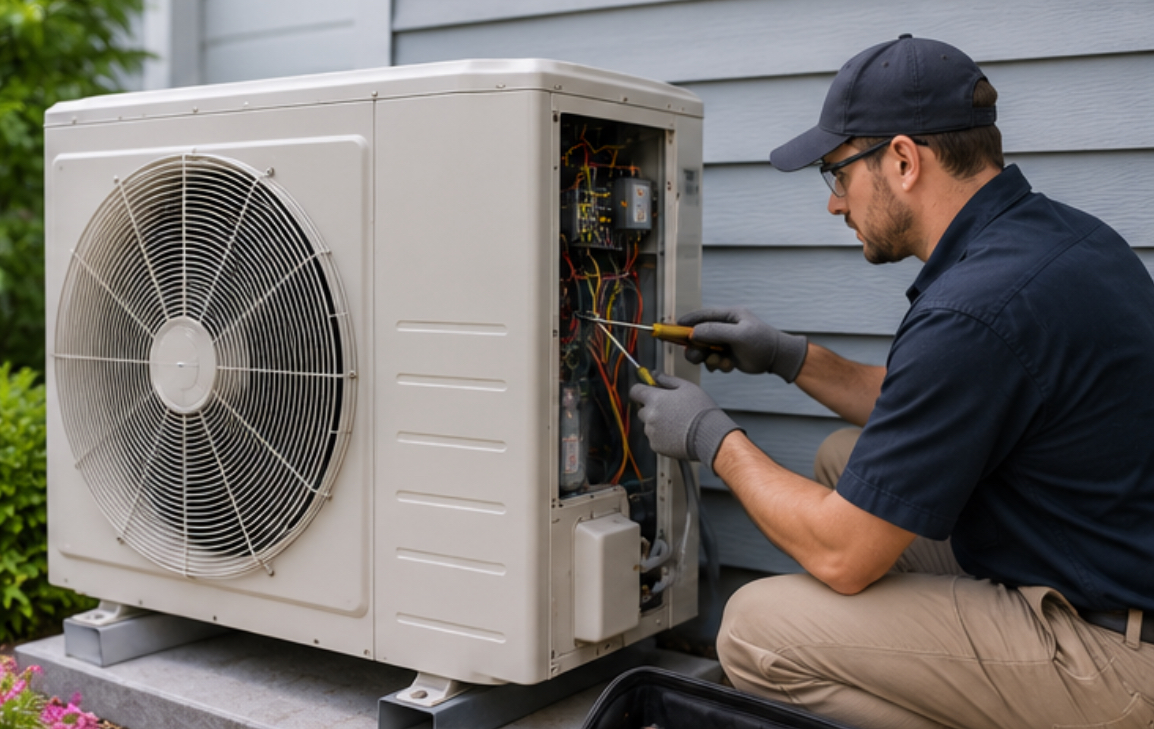
A seasonal tune-up includes checking refrigerant levels, cleaning the indoor and outdoor coils, inspecting electrical components, and verifying airflow. These services help your heat pump operate at peak efficiency before the summer cooling season reaches its highest demand.
If your heat pump still struggles after these steps, it’s a good idea to have the system professionally evaluated before a minor issue develops into an expensive repair.
When Is It Time to Repair or Replace Your Heat Pump?

Not every heat pump that struggles during a Massachusetts heatwave needs to be replaced. In many cases, dirty coils, low refrigerant, or restricted airflow are reducing performance and can be corrected with a professional repair. Identifying the actual cause helps homeowners avoid replacing equipment that still has years of reliable service life remaining.
When Is a Heat Pump Repair the Better Choice?
If your heat pump is less than 10 years old, has been well maintained, and the issue involves a clogged coil, faulty capacitor, refrigerant leak, or airflow restriction, repairing the system is often the most cost-effective solution. Addressing these problems early can restore cooling performance and help prevent more expensive component failures during the summer.
When Should You Consider Heat Pump Replacement?
If your heat pump is 12 to 15 years old, requires frequent repairs, or struggles to keep your home comfortable even after professional service, replacing it may provide better long-term value. Investing in a modern heat pump installation can improve energy efficiency, deliver more consistent indoor comfort, reduce operating costs, and provide quieter performance during both summer cooling and winter heating seasons.
A professional evaluation helps determine whether another repair is worthwhile or if upgrading to a new heat pump is the smarter long-term investment for your Massachusetts home.
Why Choose Peach Heat & Cool for Heat Pump Installation and Service in Southeastern Massachusetts?
A heat pump’s ability to keep your home comfortable during a summer heatwave depends on more than the equipment itself. Proper sizing, expert installation, and ongoing maintenance all play an important role in long-term performance. At Peach Heat & Cool, we take the time to evaluate your home’s layout, insulation, and comfort needs before recommending the right solution.
With trusted MRCOOL® expertise, we help homeowners throughout Taunton, Bristol County, and Southeastern Massachusetts choose heat pump systems designed to deliver dependable year-round comfort. Whether you need professional heat pump servicing, or a new heat pump installation, our experienced team provides honest guidance and quality workmanship every step of the way.
If you’re wondering whether your current heat pump is ready for another Massachusetts summer or you’re considering upgrading to a new high-efficiency system, Peach Heat & Cool is here to help. We’ll make sure your home stays cool, comfortable, and energy efficient, even when the next heatwave arrives.